Recently, as one of the featured events of the 2025 Global Ocean Development Forum, the Matchmaking Conference for the UN "Ocean Decade" Marine Eco-Restoration Achievements was held in Qingdao. The project "Key Technologies and Applications for Integrated Anti-Corrosion of Fouling Organisms and Ecological Restoration in Marine Concrete Engineering", hosted by Professor Jianfu Lü from the Department of Civil and Environmental Engineering in the College of Aerospace and Civil Engineering of Harbin Engineering University, won the "Ocean Decade" China Initiative International Cooperation Seed Fund Major Project (only 4 projects worldwide) in the Innovative Technology Track of the first UN "Ocean Decade" Marine Eco-Restoration Competition.The project was also rated as an outstanding project of the competition andwas invited togive a roadshow presentation. Harbin Engineering University was the only leading university in China in this track to give an on-site roadshow presentation.
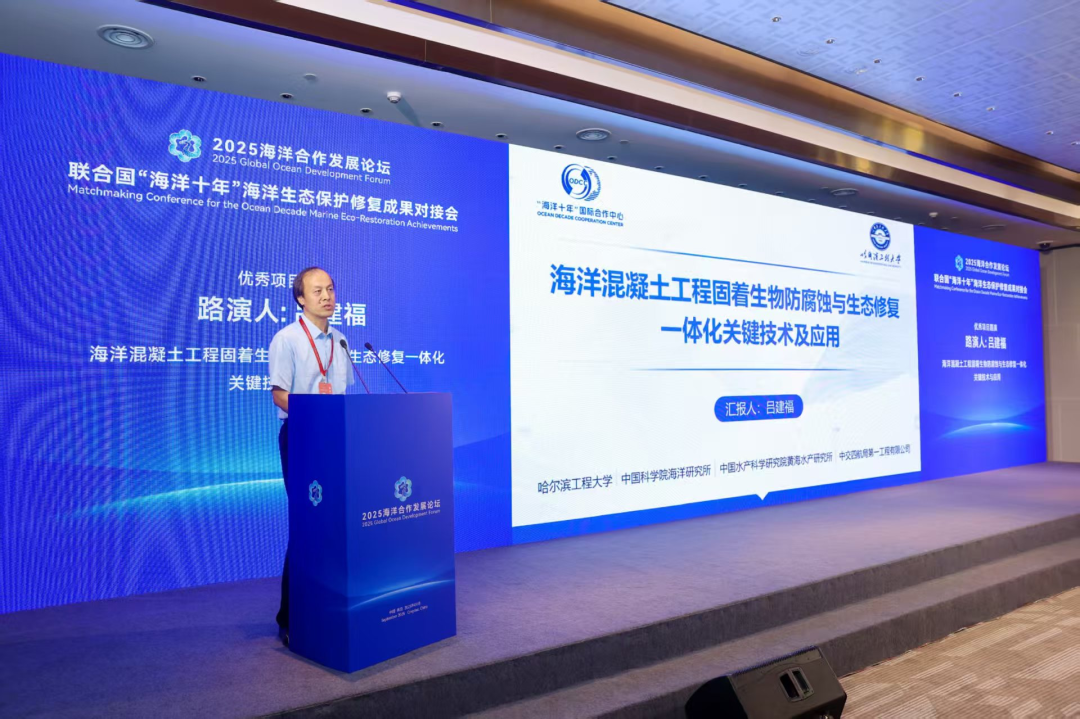
▲On-site roadshow presentation
The first UN "Ocean Decade" Marine Eco-Restoration Competition is an important event under the framework of the UN "Ocean Decade" Initiative. Approved by the Intergovernmental Oceanographic Commission of UNESCO, it has been officially included in the UN "Ocean Decade" Action Plan. Co-hosted by Ocean University of China, the Ocean Decade International Cooperation Center, and the Global Youth Innovative Leaders Community Promotion Association, the competition focuses on technological innovation and systematic solutions in the field of marine ecological protection and restoration. It aims to discover ecological civilization practice cases with demonstration value, promote the harmonious coexistence between humans and the ocean, and provide core support for building a healthy and resilient marine ecosystem.
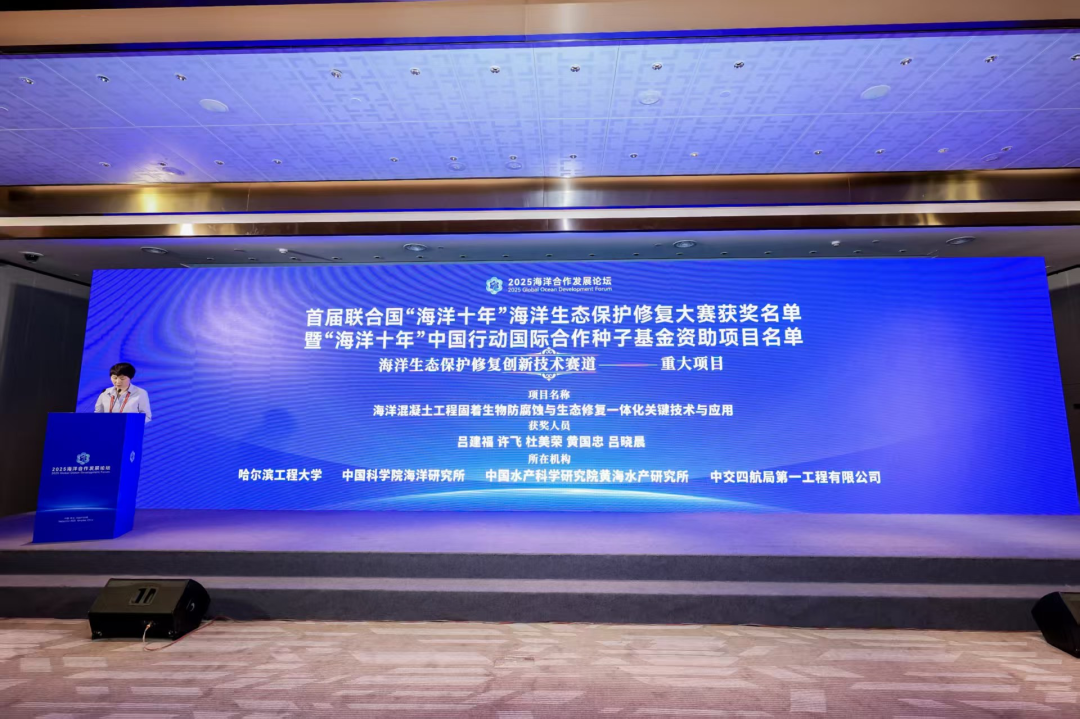
▲The conference announced the list of outstanding projects and funded major projects on site
The competition consists of three tracks: Innovative Technology, Practical Cases, and University Students. It attracted the active participation of more than 130 government functional departments, scientific research institutions, universities, enterprises, public welfare organizations, and youth teams in the field of marine ecological protection and restoration from 12 countries around the world. Thiscompetition gave rise toa number of innovative and practically valuable technical solutions and demonstration projects.
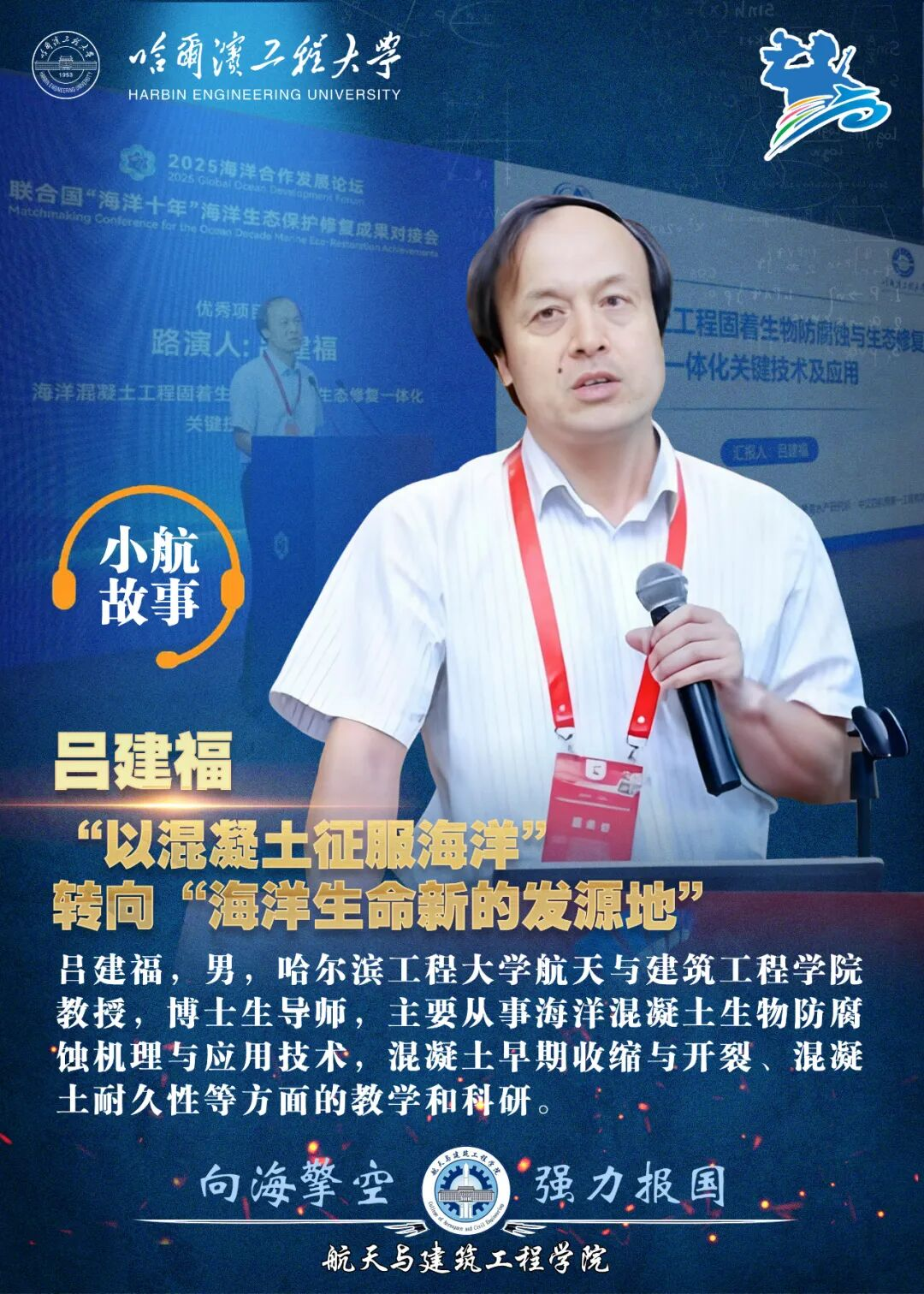
Faced with the dual challenges of global climate change and marine ecological crisis, the continuous expansion of marine concrete engineering accelerates the degradation of key ecosystems such as oyster reefs at the cost of billions of tons of new carbon emissions every year. The "kidney function" of the marine ecosystem is under threat, and the unsustainability of traditional marine development models hasbecome a subject of growing global concern.
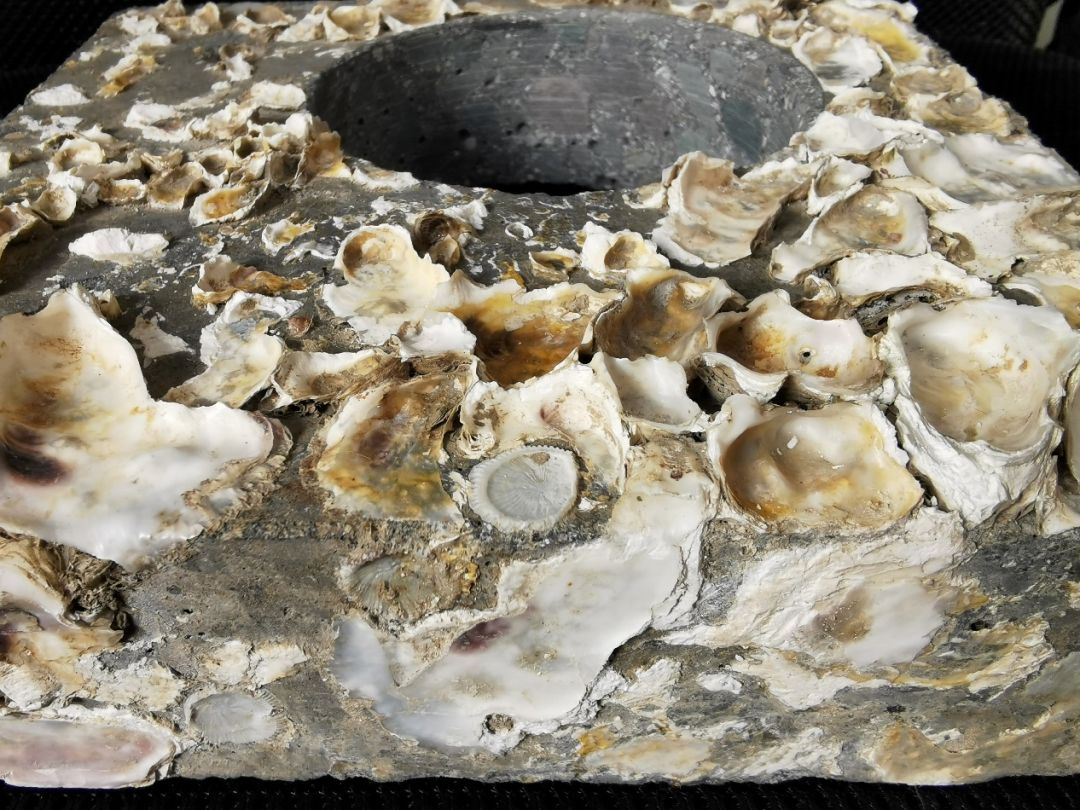
▲Concrete specimen with dense oyster attachment
Through the in-depth interdisciplinary integration of cement-based materials, marine organisms, and other disciplines, Professor Jianfu Lü's project team has reshaped the design logic of marine infrastructure, turning oyster colonies into "marine guardians". They have pioneered a global integrated technology for high durability of marine concrete engineering and marine ecological restoration based on marine fouling organisms (oysters). This innovationcreates a new paradigm of "engineering-ecology coordinated symbiosis". The project has achieved a paradigm shift from passive protection to active defense against marine fouling by developing a novel technology that uses cement-based materials to regulate oyster larval attachment. This project has reconstructed the material system through the resource utilization and functional integration of industrial and agricultural solid wastes, which not only improves engineering performance but also achieves low-carbon and even "negative carbon" ecological benefits.
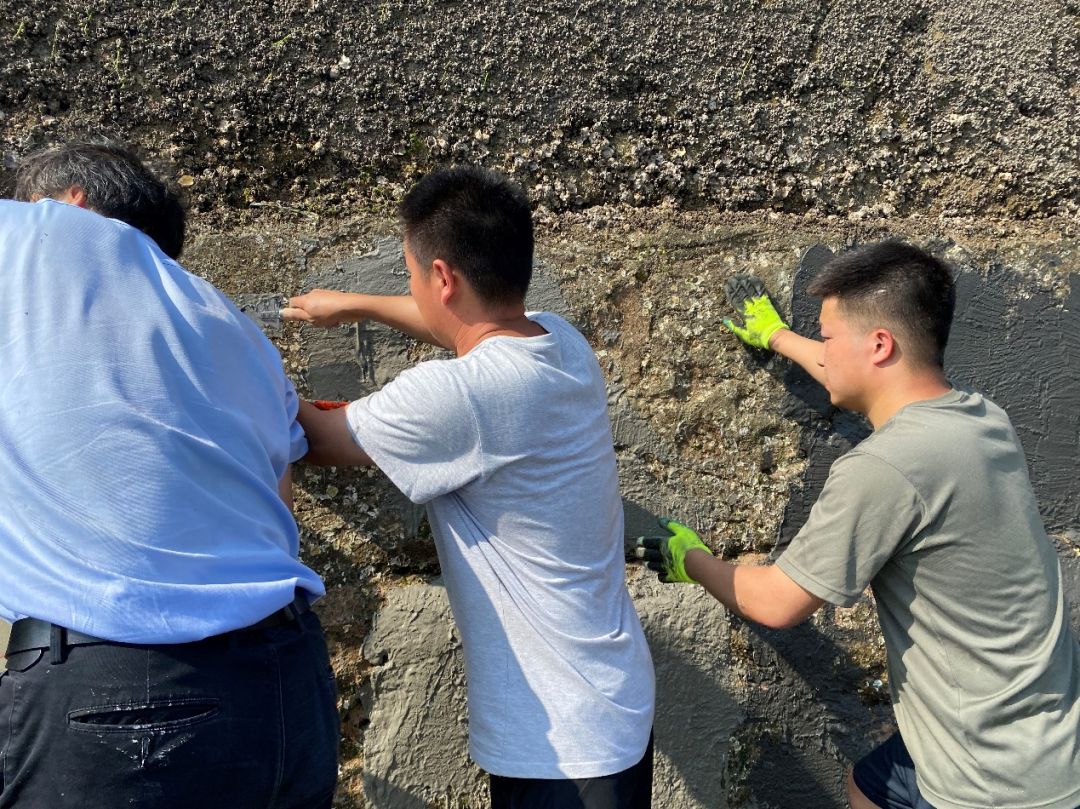
▲The team conducts field coating application in the ocean
The ecological concrete, cement-based coatings, and oyster attachment substrates developed by the team have superior characteristics such as high-efficiency heavy anti-corrosion and ecological restoration. Among them, the cement-based coatings have no volatile organic compounds (VOCs) emissions, enabling the whole-cycle carbon emissions to move from "low carbon" to "negative carbon". They can be applied in fields such as anti-corrosion of marine engineering (e.g., terminals, cross-sea bridges), ecological coasts, island and reef projects, oyster reef restoration, marine ecological restoration, and oyster breeding. They can achieve a service life of more than 50 years for coastal engineering, greatly improving the durability of marine engineering while improving the marine ecological environment in multiple aspects. Ithas been hailed by industry experts as "a subversive marine engineering anti-corrosion technology that breaks traditional cognition".
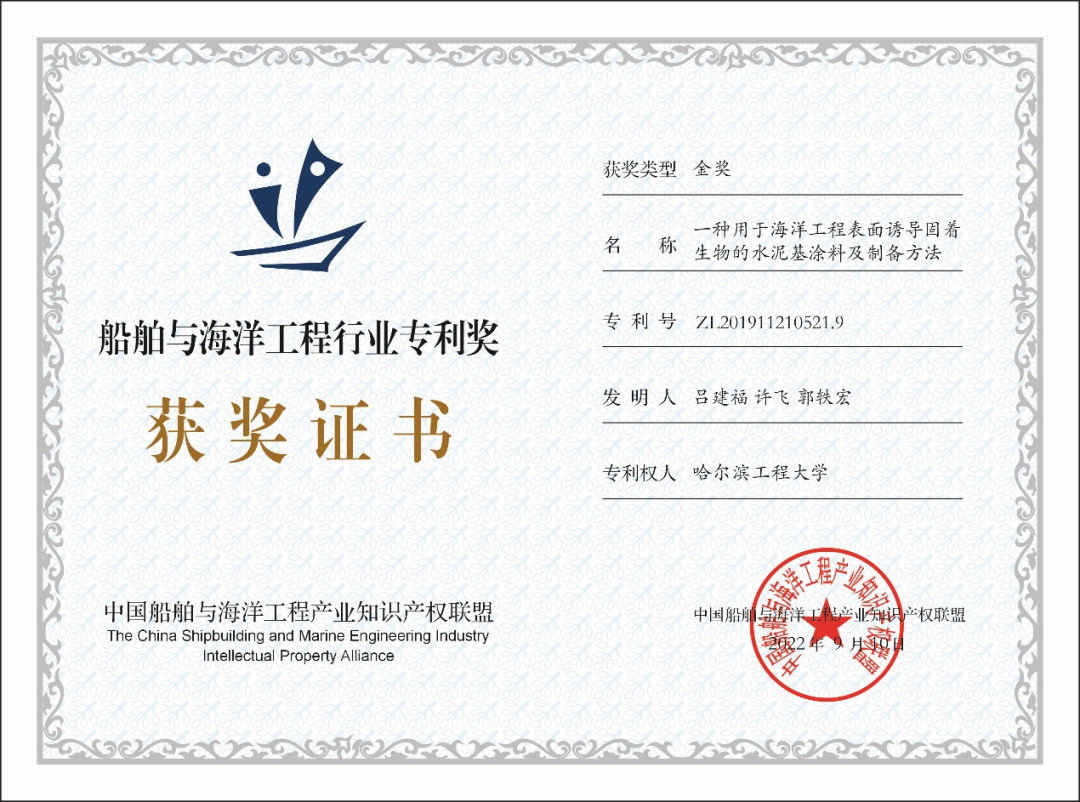
The project has won 4 awards including the Gold Award of the Ship and Marine Engineering Industry Patent. It has obtained 27 authorized invention patents, including 6 authorized patents in the United States, Japan, and South Korea, and 3 authorized layout designs.





 TO TOP
 Address
 Telephone
 Postcode